
- Home
- Get Race Catcher™
- Race Catcher™ Overview
- Race Condition cases increase with increased code in production
- IBM Support cases: In 2016: 8,932; In 2022: 19,420 ; increase of 1,000 / year is now 2,000/year, as LOC in production are increasing.
- Stack Overflow had 14,453 questions on Race Conditions in2016, Now search is limited to 500 results; Here are first 500 open questions.
- 12/09/2016 ZDNET – Three serious Linux kernel security holes patched
- 12/08/2016 Canonical Outs Live Patch Kernel Update for Ubuntu 16.04 – resolving 3 race conditions caused security issues
- 12/05/2016 Dirty COW Vulnerability Patched In Android Security Bulletin
- 11/17/2016 Remove race condition while deleting groups
- 11/8/2016 Is this plugin safe from race condition?
- 11/2/2016 Critical MySQL Vulnerabilities Can Lead to Server Compromise..
- 10/21/2016 The Dirty Cow Linux bug ..
- 09/26/2016 net/rpc: race condition in Server.ServeCodec
- 09/19/2016 Canonical Releases New Linux Kernel ..
- 07/29/2016 GCI: Race condition when deleting docker0
- 07/26/2016 Undocumented race condition …
- 05/26/2015 Race Condition Exploit in Starbucks Gift Cards
- 05/21/2012 Nasdaq’s Facebook glitch came from ‘race conditions’ (Updated Costs: Facebook Investors $500M, NASDAQ $62M)
- 01/26/2004 Mission to Mars almost failed due to a Race Condition
- Therac-25 fatally overdosed 6 patients due to a Race Condition
- 2003 Northeast Blackout caused by a Race Condition
- In the Press
- New Paradigm in Ensuring the Reliability of Software Applications
- New Product and Service on AWS Cloud
- Clear View Into the Cloud with ARM-CM
- A Newly Released Race Catcher™ Workstation – Don’t Make Me Think
- SD Times: “to me, software programs are alive”
- SD Times: Industry Watch – Page 50
- While people create software programs

Race Catcher
Race Condition Analysis
Your Application Reliability

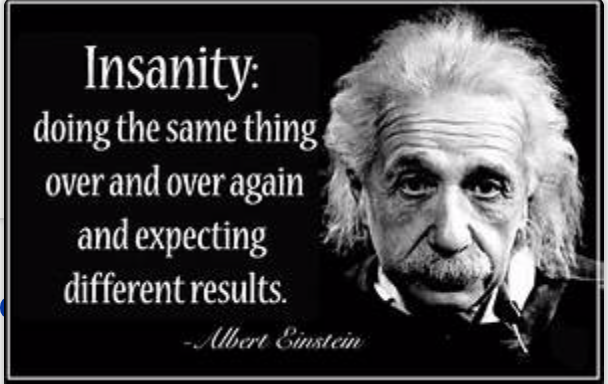
Race Conditions appear to disagree with Einstein. Constant software algorithms may produce different results on the same input.
That is, however, due to independently running threads.
These different threads live in their own space-time-energy universes, (algorithm space – algorithm time – energy of cause-effects). Race conditions are caused by intersections between those universes in unpredictable times, i.e. accesses to common memory (corresponding algorithm’s space). It is like a passage (a whole) from one universe to another that can be opened at the wrong time.
That difference in these threads’ universes (space and time) is what makes Race Conditions the most complex software bugs to analyze without a good Dynamic Code Analyzer.
Luckily, Race Catcher - automatically locates
Race Conditions with 0% False Positives precision.
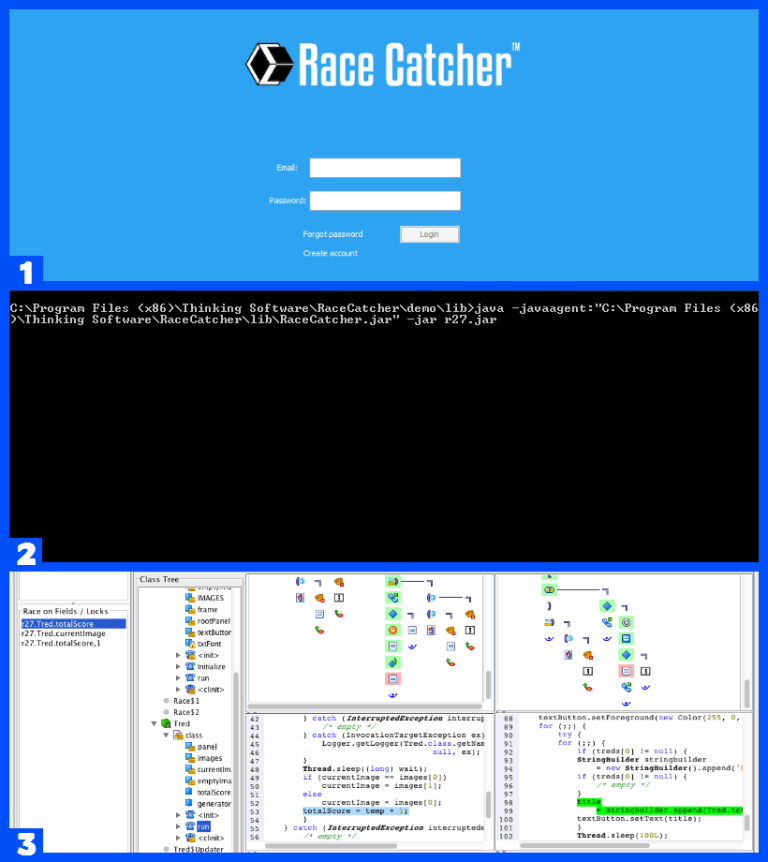
Follow 2 simple steps to locate Race Conditions in your Java based application.
1. Download Race Catcher™ and run "sumui". Free account will be created.
2. In your application script, Instead of "java -jar yourjar.jar" use "jta -jar yourjar.jar".
-------
The results will automatically appear in the Race Catcher™ UI


Testimonials

Ramadass VenkadasamyLinkedIn - Senior Site Reliability Engineer
This tool should be a part of every IDE.

Irena ShaigorodskyTripAdvisor - Principal Software Engineer
This would have saved me 6 months of my life.
Testimonials

Jukka TervaskantoREX Electric & Technologies - Project Manager
Thank you for this amazing software. We have been able to catch a few races in our product.

Jaroslav TulachNetBeans - Platform Architect
Thanks for analyzing our RequestProcessor. I am looking forward to make NetBeans more reliable.
Testimonials

Ben LevinskySonoma State University - President of the ACM chapter
The concept of catching race conditions seems like a problem that won't go away while humans still develop programs.

Valuable service.

